Could you imagine living in a zero waste city? The small town of Kamikatsu is a place where the people manage to divert essentially all of their waste from the landfill.
At the end of each module in our new course, Road to Zero Waste, we share a handful of additional resources to support your learning. We’ve compiled them in one place for easy access.
Even after transitioning almost all of my traditional household products to zero waste alternatives AND committing to shopping primarily secondhand AND learning how to grow my own food AND thinking about how to be a more conscious consumer 24/7, trash still happens.
This summer, during a community event all about the circular economy and the Right to Repair movement hosted by the Black-led environmental justice group, Basilica Bio, we dug into the barriers and challenges that stand in the way of creating a more circular economy. We also shared a selection of local examples and resources to help folks feel empowered to take action locally.
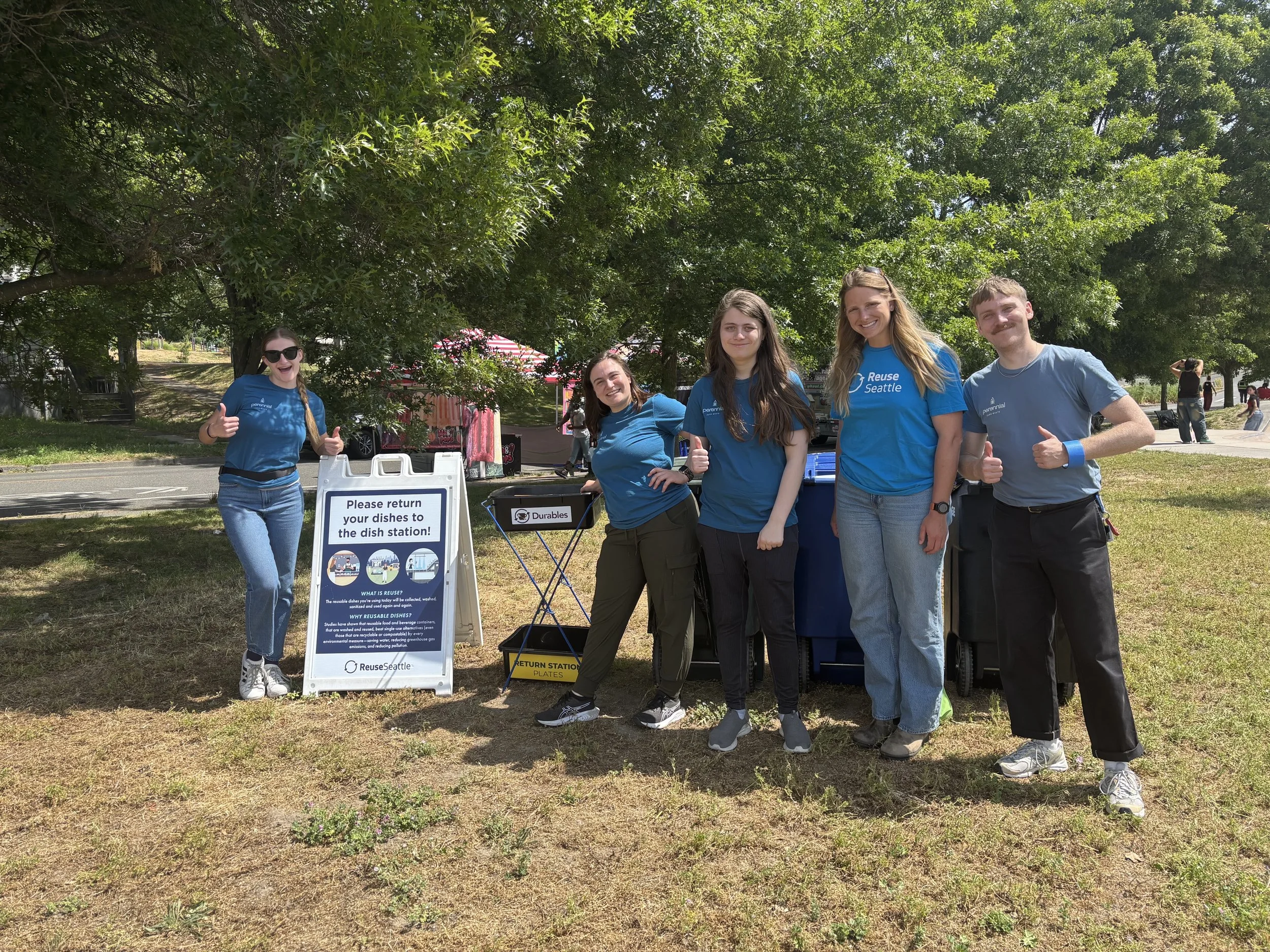
For their annual Juneteenth Celebration this year, the Northwest African American Museum (NAAM) collaborated with Reuse Seattle to bring reusable dishware to its food trucks. Our team at Blue Daisi Consulting led the planning and coordination for this event to ensure this collaborative effort was a success.
Situated among breweries and climbing gyms on the southeastern edge of Fremont, you’ll find the North Transfer Station. Driving down 34th, the facility is unassuming, its large concrete walls tucked away behind carefully manicured trees and shrubs, its pedestrian entrance outfitted with a sprawling sculpture of orange metal. I’ve walked by the building a handful of times on my way to the Seattle Bouldering Project, strolling through a small garden on its eastern side, never knowing what I was passing.
The Blue Daisi Book Club by Kira Telgen, Blue Daisi’s Project Assistant
Our first book was “A Zero Waste Life in Thirty Days” by Anita Vandyke. Kira reminds us that incorporating zero waste habits into our daily life in whatever ways we can is not only a pathway to living a more sustainable life but also one for connecting with others in our community at a time where it’s more important than ever.
The delegation was on a tour of major global cities to learn about sustainability practices to guide policymaking in Japan, and Seattle was one of their stops.
I visited a local recycling center in Woodinville in August 2024 through a tour hosted by Zero Waste Washington and I have some thoughts…
People often ask me about what they can do to live more sustainable lives. Many of us try our best, which is noble considering that we live within imperfect and extractive systems that make living in complete alignment with our values a somewhat impossible feat.